
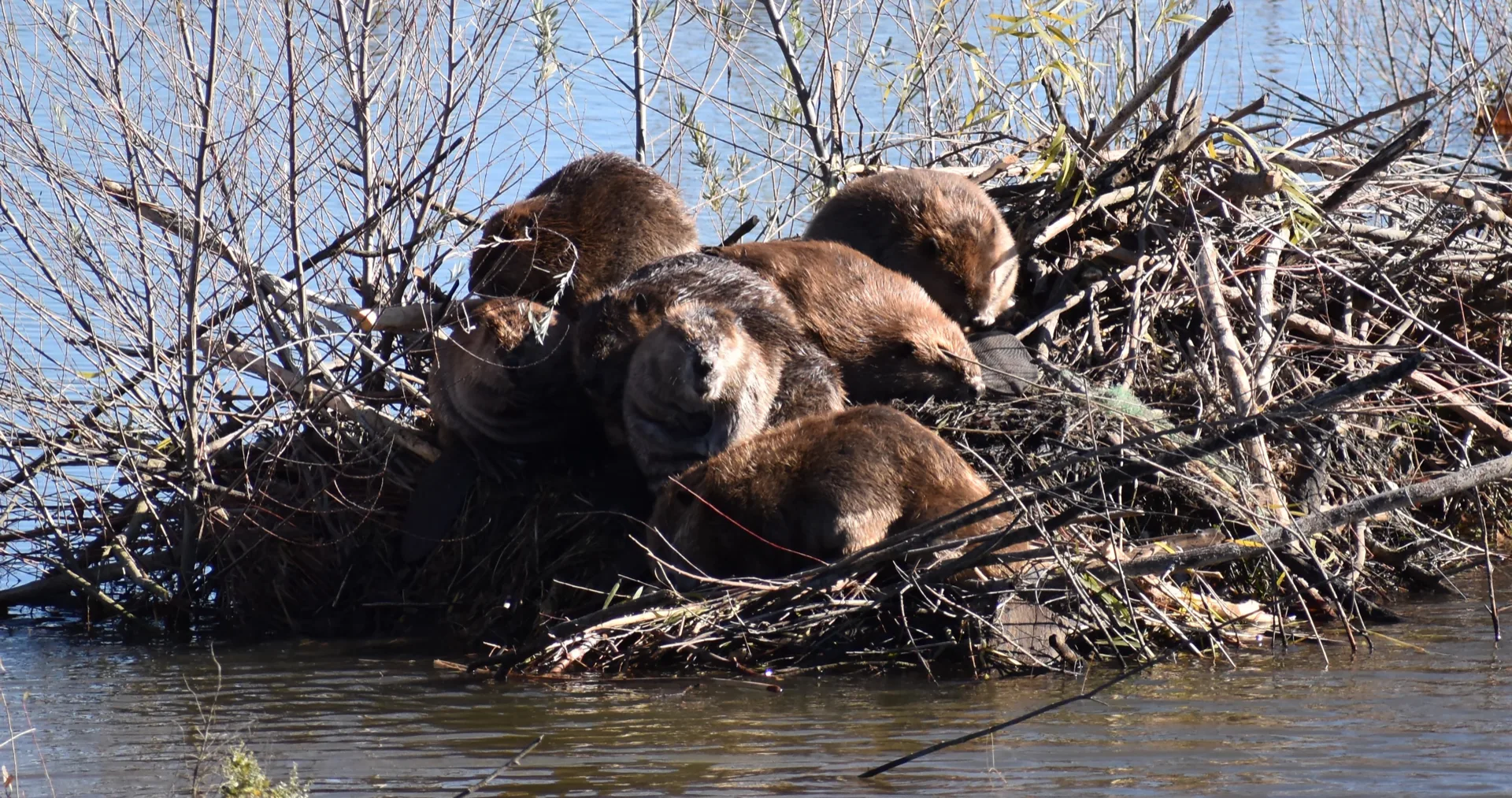
Funding from a 2021 settlement agreement between the Central Coast Regional Water Quality Control Board and Pacific Gas and Electric Co. is supporting the Drinkable Rivers Program in San Luis Obispo County, a program that puts elected officials, students and others on the water to witness the benefits of beaver dams and ponds.
"The program not only helps the river, wildlife and the environment, it also directly involves the public," said Ryan Lodge, executive officer of the Central Coast Water Board. "Providing hands-on experience for people who care deeply about the environment builds support for protecting the Salinas River in the long term. Additionally, the settlement with PG&E for water quality violations illustrates how our enforcement actions can both serve as a deterrent and lead to measures that benefit the public and the environment."
The Central Coast Water Board is one of nine regional boards tasked with overseeing water quality in their watersheds. The regional boards set water quality standards and discharge requirements and take appropriate enforcement actions when necessary.
From pests to protectors
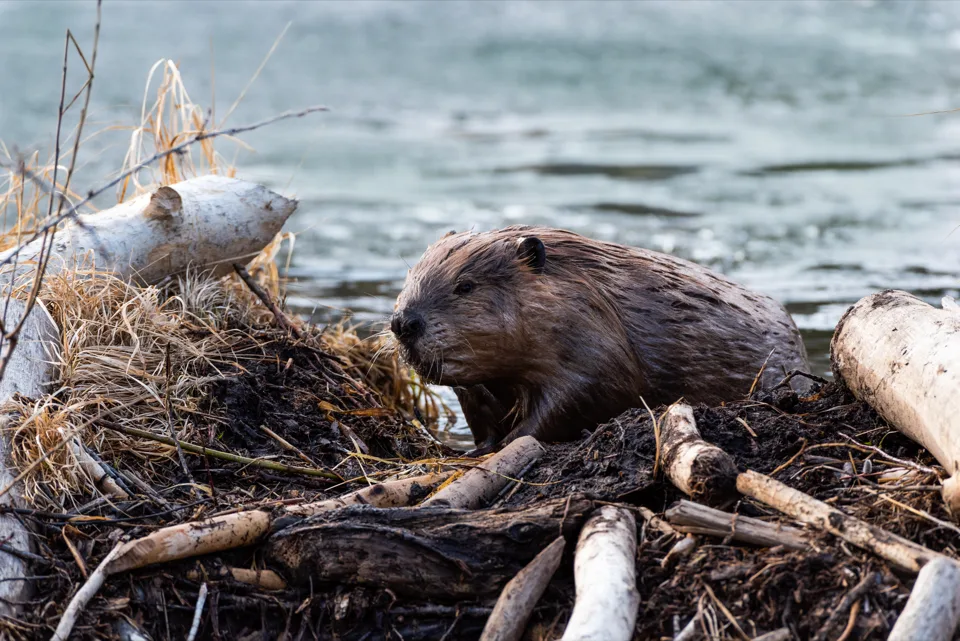
Once viewed as pests, beavers are now recognized for their many ecological benefits and their ability to help revitalize creeks and rivers. Research has shown that beaver dams can boost groundwater levels, improve water quality, provide drought resiliency, support biodiversity and even reduce wildfire risk.
"Beavers are our original river stewards and truly a keystone species; they are worth getting excited about," said Audrey Taub, executive director of the San Luis Obispo (SLO) Beaver Brigade, a nonprofit dedicated to improving beaver habitat. "We want people to know that beavers can improve climate, drought and wildfire resilience throughout California."
Targeted by settlers and fur trappers, California and the West's beaver populations declined sharply in the 1800s. Trappers desired the beavers' valuable pelts while landowners retaliated against the giant rodents for building dams that slowed stream flow, flooded farmland and disrupted water delivery systems.
North American beaver populations were once pegged as high as 200 million, but after decades of exploitation and eradication, there are only approximately 10-15 million beavers left.
A comeback story
"Thanks to the leadership of our tribal partners and years of preparation, beavers are returning to their original homeland around the state."
— Gov. Gavin Newsom
With the help of conservationists and researchers, California beavers' prospects are improving. In 2023, the California Department of Fish and Wildlife conducted its first beaver conservation release, returning beavers to the ancestral lands of the Mountain Maidu people in Plumas County. More releases have followed across the Sierra Nevada mountain range.
"Thanks to the leadership of our tribal partners and years of preparation, beavers are returning to their original homeland around the state," said Gov. Gavin Newsom in 2023. "California is restoring wildlife and critical habitat by working hand-in-hand with the tribes who have stewarded these lands."
'Beaver believers'
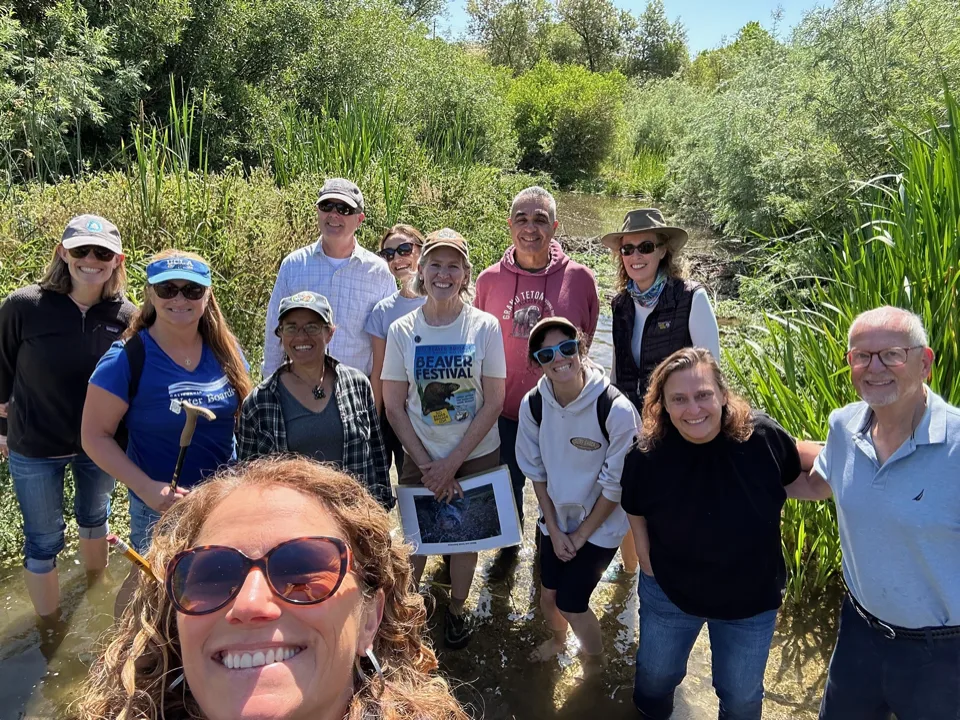
Back on the Central Coast, the Beaver Brigade has one hard and fast requirement for its tour participants: they must be willing to get wet.
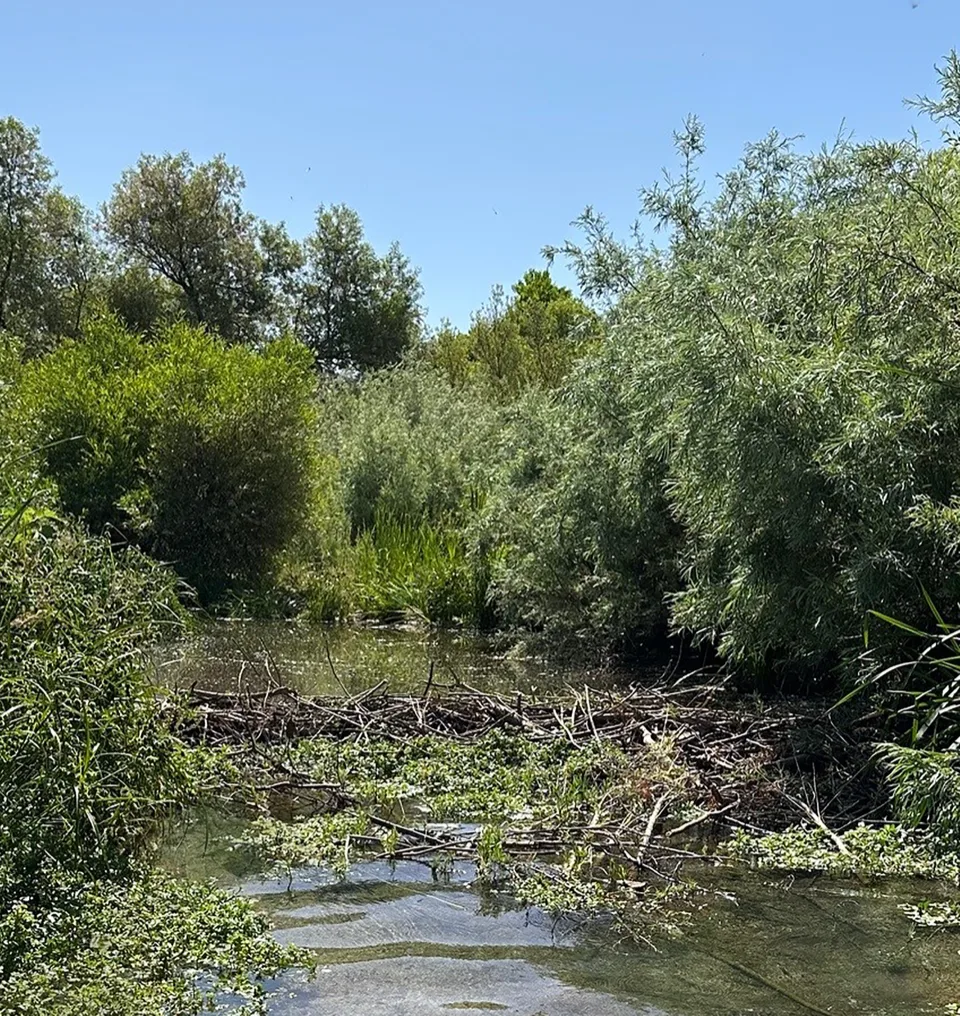
On a sunny summer morning, the brigade led Central Coast Water Board staff into the Salinas River's clear and shallow waters. Surrounded by thickets of cottonwoods, willows and other native vegetation, the participants got a close look at beaver dams and ponds on a stretch of the river near the city of Atascadero.
"The program not only helps the river, wildlife and the environment, it also directly involves the public. Providing hands-on experience for people who care deeply about the environment builds support for protecting the Salinas River in the long term."
— Ryan Lodge, executive officer of the Central Coast Water Board
The river is the cornerstone of the Salinas Valley's productive agricultural industry. Its surface flows and groundwater stores help farmers grow the lettuce, broccoli, strawberries, wine grapes and other crops that have earned the valley the moniker of the nation's "salad bowl."
The one-day educational tours, offered in English and Spanish, are free and teach participants to identify signs of beaver activity and how the dams can reduce common aquatic pollutants such as nitrates, phosphates, metals and excess sediments.
"People that go on our tours become beaver believers instantly," Taub said. "We offer people the chance to be comfortable in a natural setting and see the beauty and wildlife all around the river."
In addition to tours, the brigade uses grant funding from the Central Coast Water Board's enforcement activities to support its summer internship course that offers teenagers career preparation skills, including data collection and presentation experience. The program also helps participants prepare for college by facilitating connections with Cal Poly San Luis Obispo's College Corps Program.
Enforcement supports environmental work
The Water Boards' Office of Enforcement plays a key role in protecting water quality, water supply and water availability for present and future generations by providing technical and legal support for enforcement actions across all the Water Boards' regulatory programs.
Staff from the state and regional water boards work with public water systems, dischargers, and other regulated parties to ensure compliance with applicable laws and permits. Most formal enforcement actions fall into one of two categories: compliance orders and monetary penalties. In fiscal year 2024/25, the Water Boards issued 2,509 informal enforcement actions, 1,293 compliance actions and 209 penalty actions, imposing approximately $29 million in penalties.
"The funding we receive [from the 2021 PG&E settlement] allows us to broaden whom we can take out to see the re-emerging beaver habitat and educate about the importance of the health of the Salinas River."
— Audrey Taub, executive director of the SLO Beaver Brigade
In some cases, the Water Boards allow parties to settle their enforcement matters by completing or funding environmentally beneficial projects, including the one that is educating Central Coast residents about the importance of beavers.
To resolve alleged water quality violations at its Diablo Canyon Nuclear Power Plant, PG&E agreed to pay $5.9 million to the Central Coast Water Board; the board ultimately allocated $1.2 million from the settlement to the Central Coast Community Based Water Quality Grants Program, which helps fund the Beaver Brigade.
"The funding we receive [from the 2021 PG&E settlement] allows us to broaden whom we can take out to see the re-emerging beaver habitat and educate about the importance of the health of the Salinas River," Taub said.
Learn more about the Water Boards' enforcement program.