


Harmful algal blooms reported at Mono County’s Crowley Lake; Caution urged for all water users
Toxic algae pose serious threat to children, pets
SOUTH LAKE TAHOE – The recent discovery of harmful algal blooms at multiple locations in Crowley Lake in Mono County has prompted the Lahontan Regional Water Quality Control Board (Regional Board) and Mono County Environmental Health to urge recreational water users to exercise caution when in the lake.
Testing in localized areas of the lake, a popular destination for trout fishing located 45 miles southeast of Yosemite National Park, confirmed the presence of harmful algal blooms (HABs). These areas now have posted warning and danger advisories to alert lake visitors of the elevated health risk. Although the blooms did not extend across the entire lake, caution should be exercised lake-wide due to rapidly changing conditions. The warning and danger advisories will remain in place until further notice.
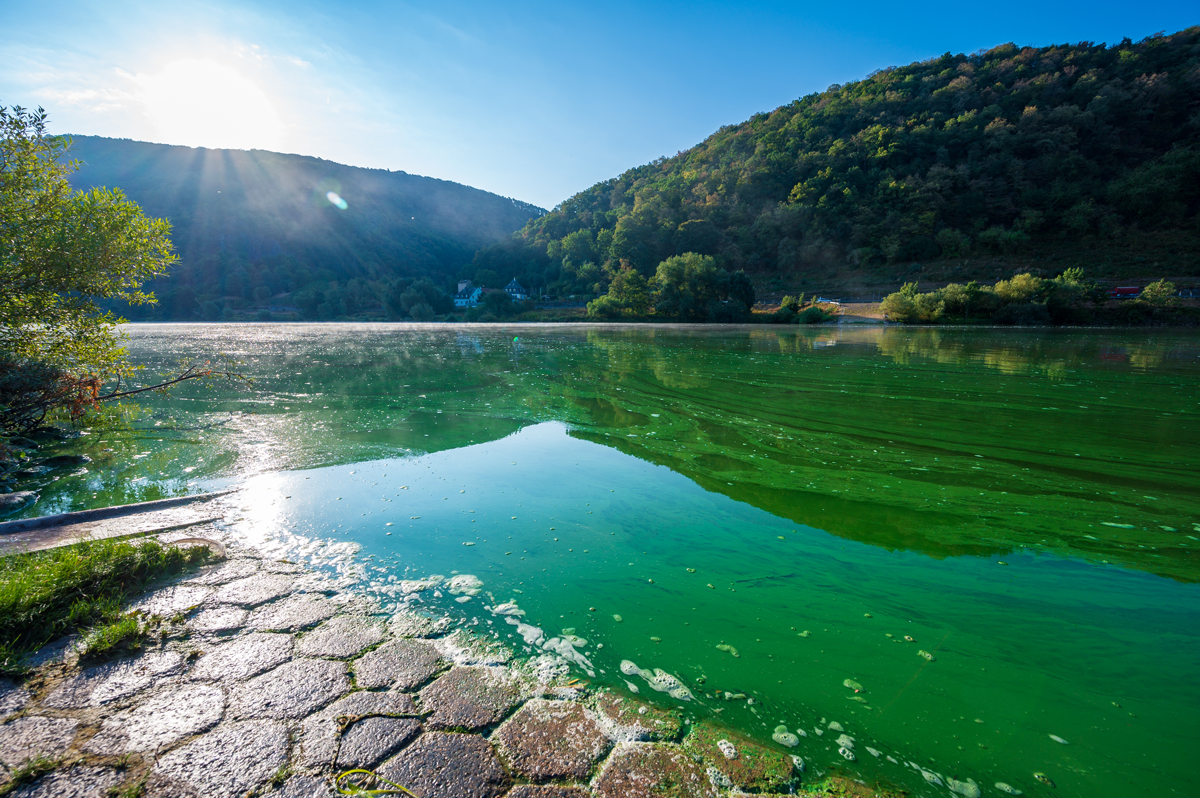
Figure 1: Image of the danger level harmful algal bloom.
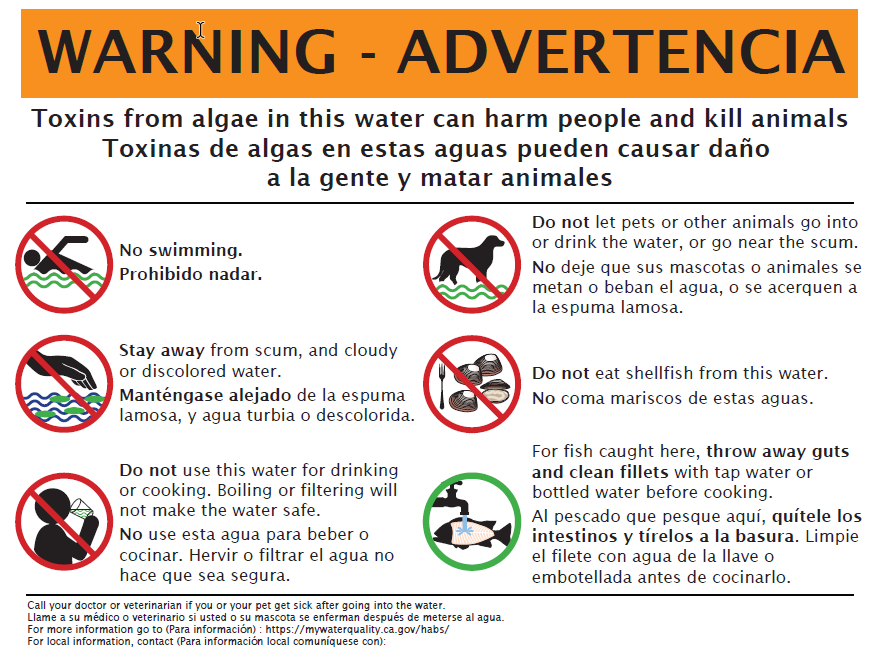
Figure 2: Warning sign posted
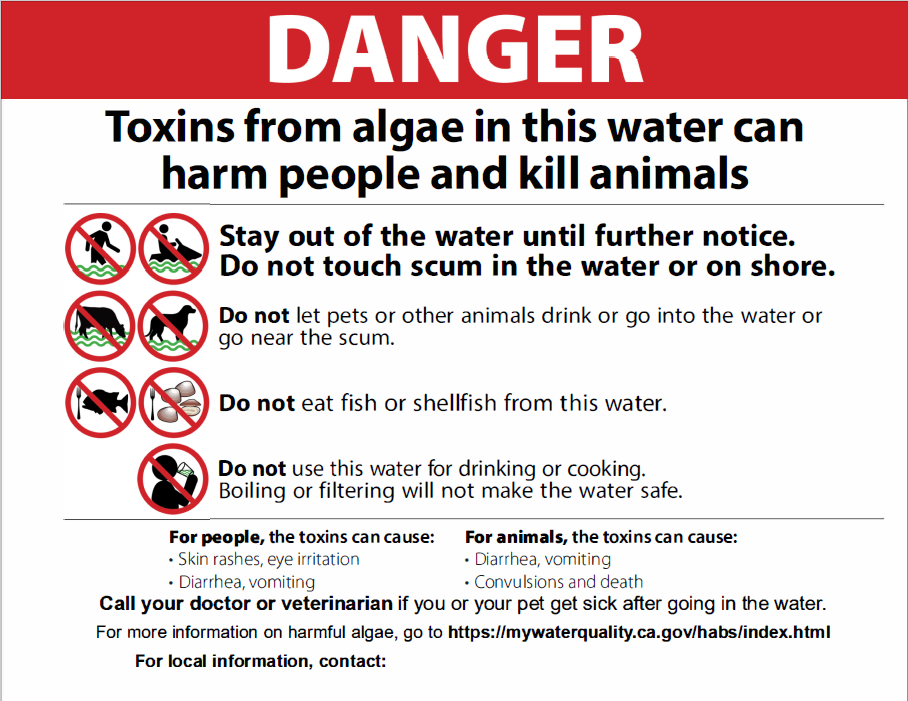
Figure 3: Danger sign posted
Water samples were collected by Regional Board staff on August 4, 2021 at the Marina and Hilton Creek Drainage, locations on the southern end of the lake near highway 395. Since the concentration of cyanobacteria can vary at different locations and time of day, a caution advisory level is in place throughout the lake. Lab results detected HAB toxins that exceed the Danger trigger level of 20 micrograms per liter near the Hilton Creek drainage, and HAB toxins exceeded the Warning trigger level of 6 micrograms per liter at the Marina (refer to advisory recommendations below). HABs produce dermatoxins that can cause skin inflammation, itchy skin and rashes, as well as gastrointestinal distress if HAB material is swallowed while swimming. Due to the size and toxicity of the bloom with increasing temperatures this time of year, the bloom may proliferate and alter its potential to produce toxins.
The recommendation to use caution is based on the potential health risks produced by cyanobacteria, a group of organisms that form HABs. The bloom occurring in the lake appears suspended on the water’s surface (Figure 1). Bloom conditions can change rapidly, as the winds and waves move or concentrate the bloom into different regions of the lake. In some areas, the bloom may concentrate and form a film or scum on the water surface.
The color of the water may also appear discolored as bright or dark green. DANGER Crowley Lake, a reservoir created in 1941 by the construction of the Long Valley Dam on the Upper Owens River, is managed by the Los Angeles Department of Water and Power. The lake provides multiple recreational areas for boating, swimming, and fishing. Crowley Lake’s outflow is the Owens River. Downstream users should be aware of the issue and use caution when recreating.
Mono County Environmental Health has posted advisory signs at the entry points to the recreational areas to notify recreational users of the bloom (Figure 2 and Figure 3). The Regional Board will provide updates on the site conditions on the HAB Incident Reports Map.
To report a bloom, do one of the following:
- Fill out the Bloom Report form on the HABs Portal:
- Email: CyanoHAB.reports@waterboards.ca.gov
- Call the HABs hotline: 1-844-729-6466 (toll free)
- Contact your County Public Health Office
For more information about HABs, please visit:
- California Harmful Algal Blooms Portal
- California Department of Public Health Resource Page

